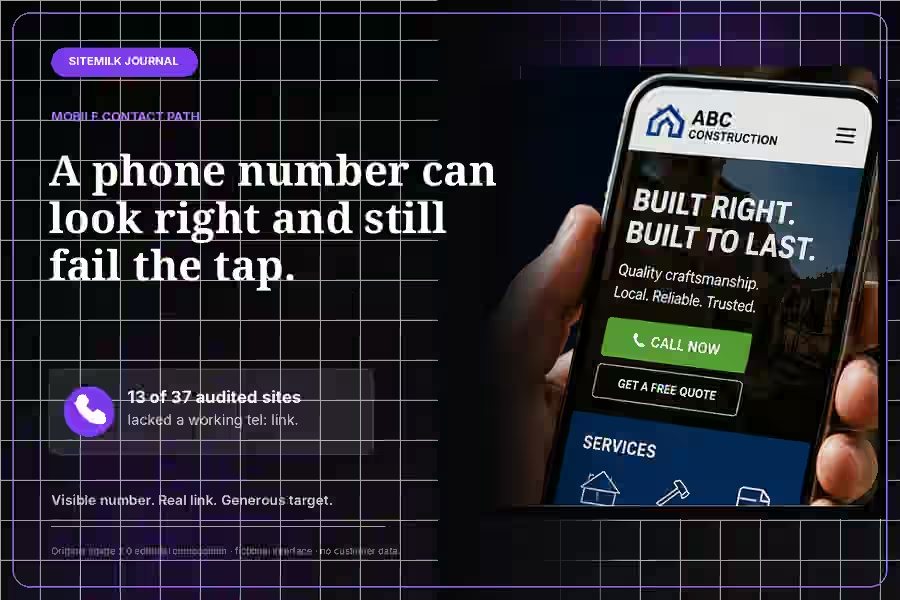
If we could only fix one thing on a contractor's website, it would not be the most common problem in our audit data. It would be a phone number that sits on the page as plain text, unable to be tapped as a telephone link. Across the 37 reproducible contractor and home-service audits in our committed corpus, 13 sites had this defect, or 35%.
We call it the costliest defect as an editorial and operational judgment, not as a measured revenue finding. Our rubric can prove whether the link exists. It cannot see a contractor's call logs or calculate how many jobs were lost. The reason we prioritize it is simpler: it adds friction after a visitor has already decided to make contact.
The most common problem is not this one
Logo usability issues are much more common in the current dataset, appearing on 76% of the 37 sites. Logo modernity follows at 49%, stale copyright years at 41%, dated-builder signatures at 38%, and missing click-to-call at 35%.
Those percentages describe frequency, not severity. A dated logo or stale footer can weaken trust, but the visitor can still act. Plain phone text creates an extra sequence: select or memorize the number, leave the browser, open the dialer, and enter it manually. The added effort may be small, but it occurs at the exact point the website was meant to produce.
A visible number is not automatically a telephone link
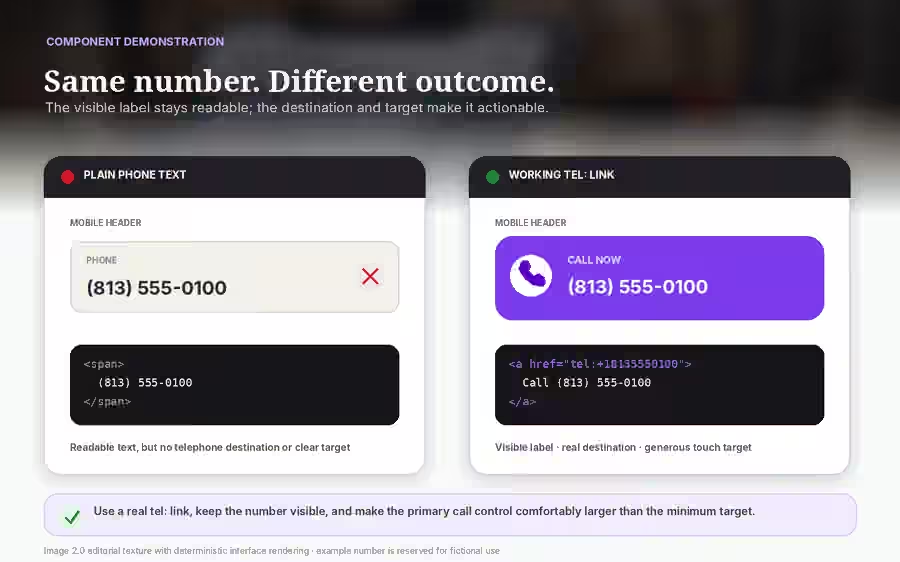
The web standard is the tel: URI scheme defined in RFC 3966. In ordinary HTML, the implementation is an anchor whose destination starts with tel:, such as <a href="tel:+18135550100">Call (813) 555-0100</a>. The example uses a reserved 555 number; a live site should use the business's actual number in a globally recognizable format.
The visible label and the destination do different jobs. The label should be easy for a person to read and confirm. The href gives a compatible device a telephone destination. Without that anchor, the browser only sees characters on a page.
What a useful click-to-call control should include
Start with a real link, but do not stop there. A phone icon by itself can be ambiguous, especially for a visitor using screen magnification or someone unfamiliar with the symbol. Pair the icon with a visible action such as “Call now” and the formatted phone number. The link's accessible name should communicate the same purpose.
Give the control enough room to activate reliably. WCAG 2.2 Success Criterion 2.5.8 sets a minimum target size of 24 by 24 CSS pixels, subject to listed exceptions. A prominent contractor-site call control can comfortably exceed that floor. Larger padding also makes the primary action easier to distinguish from navigation links and secondary controls.
Use the same linked number everywhere it appears: header, mobile menu, footer, contact page, emergency-service page, and any sticky mobile action bar. A working header link does not help a visitor who reaches the footer and finds the number rendered as plain text again.
Check your own site in ten seconds
Open your website on a phone, find the business number, and tap it once. If the device offers to place the call with the correct number, that instance is working. If the text merely highlights, copies, or does nothing, the control needs attention.
Repeat the test in every location where the number appears. Then check the link destination in the page source or browser inspector. The visible text may include spaces and punctuation for readability, while the destination should contain a valid telephone URI. Do not use an unrelated tracking number unless the business has intentionally approved and tested it.
This test does not prove that every phone or browser will behave identically, and a tel: URI does not itself guarantee a completed call. It does prove that the website supplied a telephone destination instead of asking the visitor to reconstruct one manually.
What it costs to fix
In isolation, this is maintenance rather than a redesign. Updating a shared header or footer template can repair every page at once. A site with several hard-coded copies may take longer because each instance needs to be found, corrected, and tested.
The important scope question is whether the defect travels alone. If the site is otherwise responsive, readable, and current, fix the link and move on. If the same inspection uncovers broken navigation, an unusable mobile layout, stale business information, or inaccessible controls, address those findings as a defined maintenance project rather than using one small defect to justify an unnecessary rebuild.
See the direction before the rebuild
SiteMilk offers a free before-and-after homepage mockup so you can judge the modernization direction before committing anything. Start in the homepage contact section or email milkman@sitemilk.com.
Same brand. Modern build. Fresh pour.
Frequently asked questions
What is the most common problem in the SiteMilk contractor audit corpus?
By raw frequency, logo usability is the leading finding, present on 76% of the 37 audited sites. Missing click-to-call appears on 35%. We prioritize the latter because it directly affects the contact step, while clearly labeling that priority as judgment rather than measured revenue loss.
Why does click-to-call matter on contractor websites?
Many contractor searches happen on phones, and some involve time-sensitive needs such as a leak, a failed air conditioner, or storm damage. A linked number reduces the steps between deciding to call and opening the device's telephone interface.
How should a phone link be written?
Use an anchor with a tel: destination, keep the readable number in the visible label, and provide a clear action. For example: <a href="tel:+18135550100">Call (813) 555-0100</a>. Test every repeated instance on a real phone before release.
Does adding a tel link guarantee more calls?
No. It removes a specific, observable friction point. The audit records whether the feature is present; it does not measure call volume or revenue, so a responsible article should not promise a conversion lift it cannot verify.